 EN
EN
The Philosophy of Luxury Modern Bookshelf Design
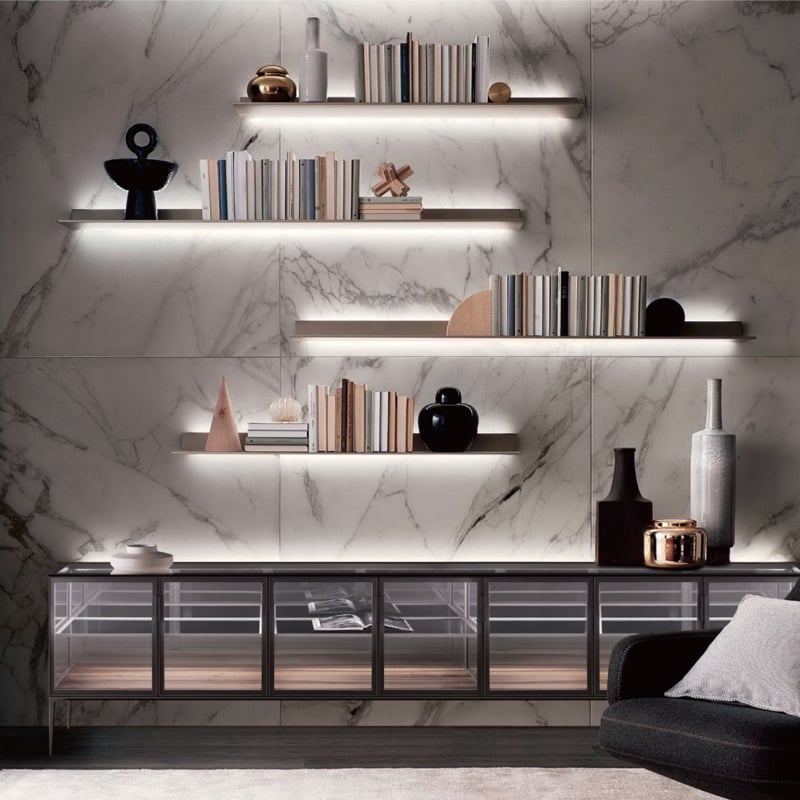
Luxury modern bookshelf design transcends conventional storage, embodying a philosophy where form and intentional function harmonize to reflect discerning taste. It prioritizes artisanal craftsmanship and material integrity over fleeting trends—creating pieces that serve as focal points in refined living spaces. Unlike utilitarian shelving, these designs elevate display into a curated experience, emphasizing spatial balance, tactile quality, and sculptural presence. At its core lies intentionality: every joint, material choice, and proportion communicates a narrative about enduring quality and aesthetic discipline. Superfluous ornamentation is rejected; expressive power emerges instead from precise geometries and the honest expression of materials—solid hardwoods, brushed metals, or honed stone. By integrating seamlessly with architecture, these pieces transform personal collections into intentional compositions, affirming a design ethos where everyday objects become gallery-worthy.
Architectural Form Meets Intentional Function
In luxury modern bookshelf design, architectural forms actively shape living environments—not merely storing items, but curating spatial experiences through deliberate material intersections and gravity-defying compositions that function as art.
Modular Systems as Spatial Organizers — Beyond Storage
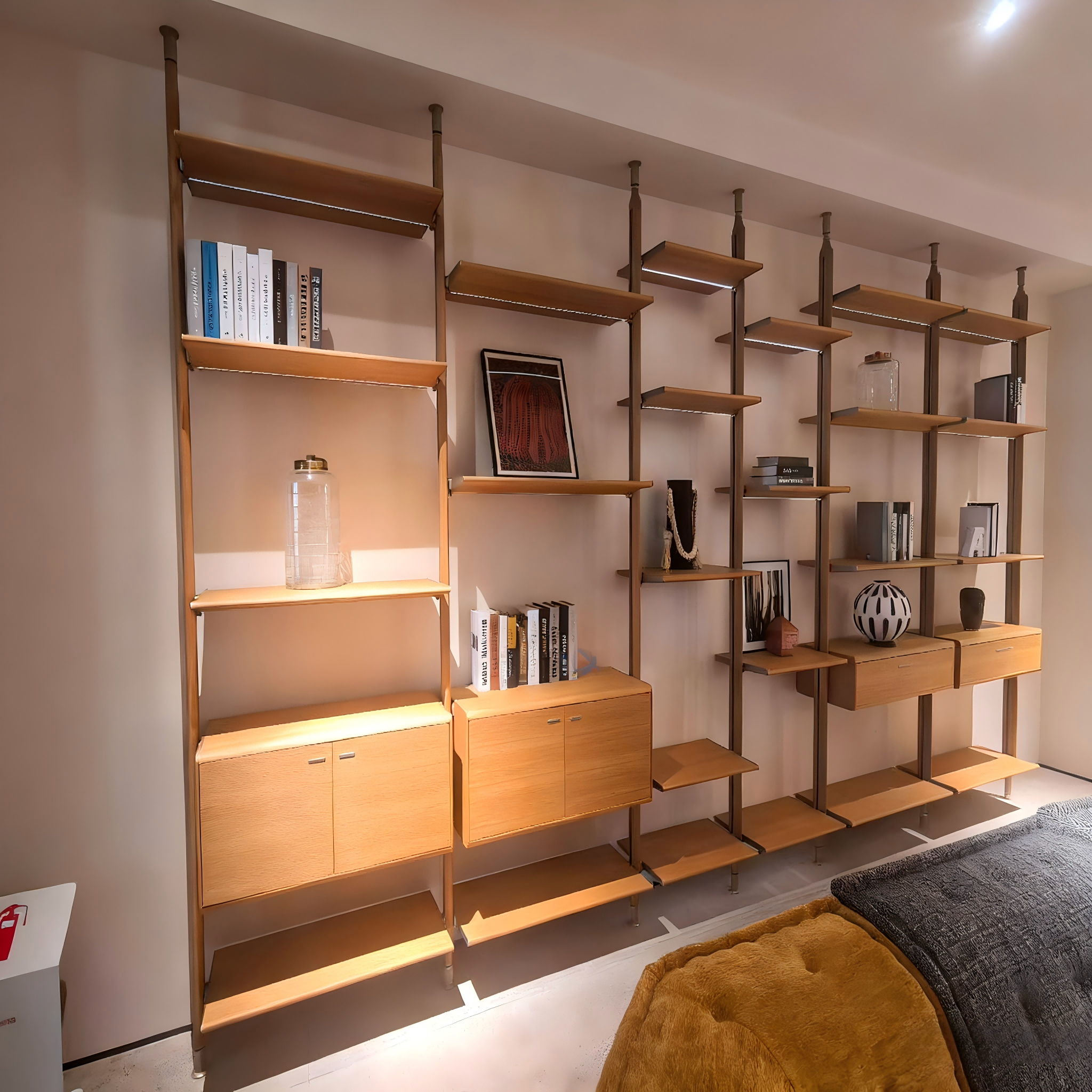
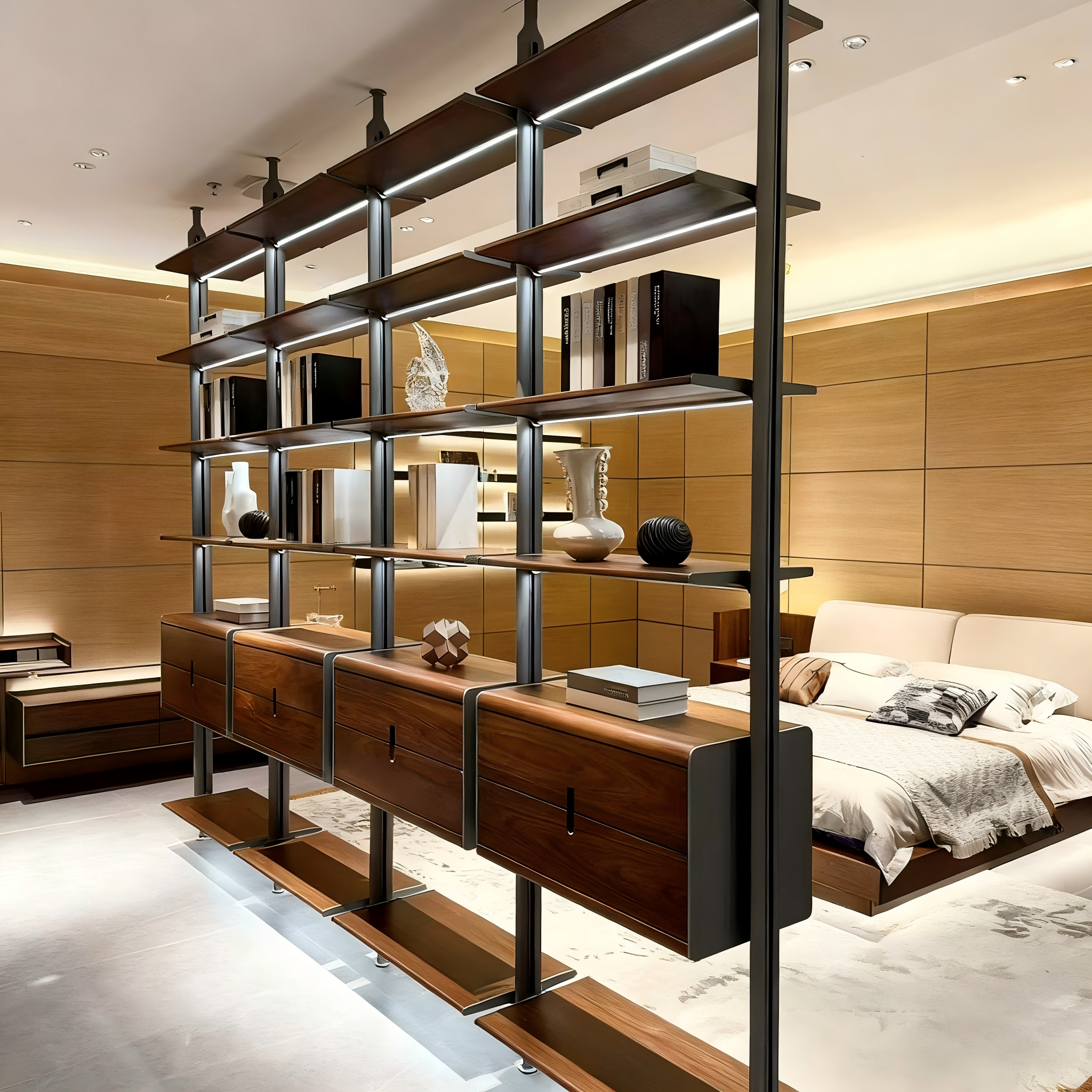
Modular shelving units dynamically partition interiors using reconfigurable geometries. Vertical stacks paired with asymmetrical horizontals define zones without walls—creating visual thresholds between living and working areas. A single framework can transition from displaying literature to showcasing ceramics via interchangeable panels and depth variations. This flexibility minimizes clutter while maximizing utility, especially valuable in compact urban dwellings where 73% of owners prioritize multifunctional furniture (Dwell 2024). Ribbed surfaces and thoughtfully placed negative space guide sightlines, turning passive storage into active spatial choreography.
Floating, Cantilevered, and Wall-Integrated Structures
Cantilevered shelves achieve visual weightlessness through concealed steel substructures, with premium installations supporting spans exceeding 60 inches. Elevated above floor planes, they enhance perceived room volume—particularly impactful in spaces under 400 square feet. Wall-integrated systems anchor collections via flush-mounted rails built around aircraft-grade aluminum cores, supporting over 80 lbs per linear foot. The absence of vertical supports creates uninterrupted material narratives—whether highlighting rift-sawn oak’s linear grain or the monolithic presence of marble. Such designs balance minimalist aesthetics with rigorous structural calculation.
Premium Materials and Texture Intelligence
Rift-Sawn Oak vs. Walnut: Stability, Grain Narrative, and Sustainability Credentials
Material selection defines luxury modern bookshelf design—balancing visual impact with long-term performance. Rift-sawn oak delivers exceptional dimensional stability; its linear grain resists seasonal movement, ensuring warp-free shelves for decades. Walnut offers dramatic visual contrast with its swirling grain, though its slightly higher porosity demands climate-aware placement. Both woods demonstrate texture intelligence: oak’s open-pore surface invites tactile engagement with artisanal collections, while walnut’s smoother finish complements restrained, minimalist displays. Sustainability distinctions matter—FSC-certified oak regenerates in 25–30 years, whereas responsible walnut sourcing requires traceable, old-growth verification. Leading manufacturers use water-based finishes that deepen natural textures without compromising indoor air quality, aligning material integrity with eco-conscious luxury.
Curated Styling as a Signature Design Statement
Luxury modern bookshelf design reaches its fullest expression through curation—where arranging objects becomes a reflection of identity and intention. As 67% of designers confirm (Design Psychology Journal 2024), thoughtful styling directly shapes a space’s emotional resonance.
Negative Space, Scale, and Rhythm in Luxury Shelving Composition
Strategic emptiness is as essential as filled shelves. Negative space prevents visual fatigue and directs attention toward meaningful possessions. Scale variation establishes hierarchy—larger sculptures ground compositions, while smaller artifacts invite closer looking. Rhythm emerges through repetition: stacked books alternating with vertical voids, or geometric objects echoing across tiers. Consider these principles:
| Technique | Visual Effect | Design Purpose |
|---|---|---|
| Asymmetrical Spacing | Dynamic, modern feel | Prevents rigidity, invites exploration |
| Tiered Scale | Depth and emphasis | Highlights focal pieces |
| Patterned Rhythm | Cohesion without monotony | Ties disparate objects together |
Heirlooms, Sculptural Objects, and Edited Color Palettes
Personal artifacts—family journals, travel mementos, or hand-thrown ceramics—infuse narrative depth. Pair them with sculptural anchors: a bronze vessel, a carved stone orb, or a matte-black ceramic form to balance organic softness with refined geometry. Restrict color palettes to three core tones—such as ivory, walnut, and oxidized brass—to sustain sophistication. An edited approach ensures each object earns its place, transforming shelves into curated galleries rather than repositories.
FAQ
What materials are typically used in luxury modern bookshelf designs?
Luxury modern bookshelf designs often feature solid hardwoods, brushed metals, and honed stones to emphasize quality, stability, and aesthetic appeal.
Why is material selection important in bookshelf design?
Material selection is crucial as it affects long-term performance, visual impact, and sustainability credentials, ensuring the piece integrates seamlessly with the overall design ethos.
How do modular systems benefit compact urban dwellings?
Modular systems offer reconfigurable geometries that help partition space efficiently, providing multifunctional utility in areas where space savings are critical.
What is texture intelligence in bookshelf design?
Texture intelligence refers to selecting materials with textures that engage tactile senses and enhance stylistic consistency, such as the open-pore surface of rift-sawn oak or the smooth finish of walnut.