 EN
EN
What Defines a Luxury Modern Walk-in Wardrobe with Island?
Core Structural Elements: Size, Placement, and Integration
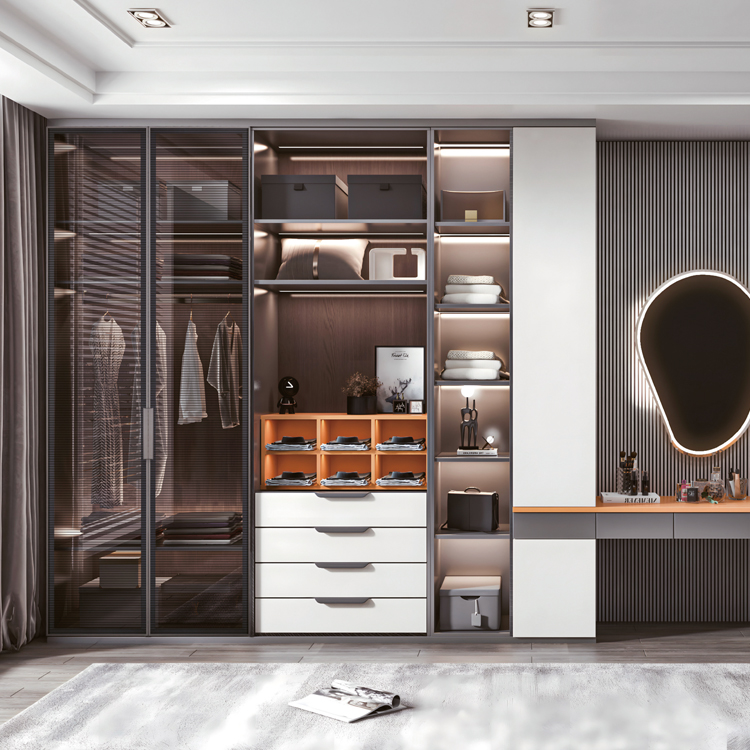
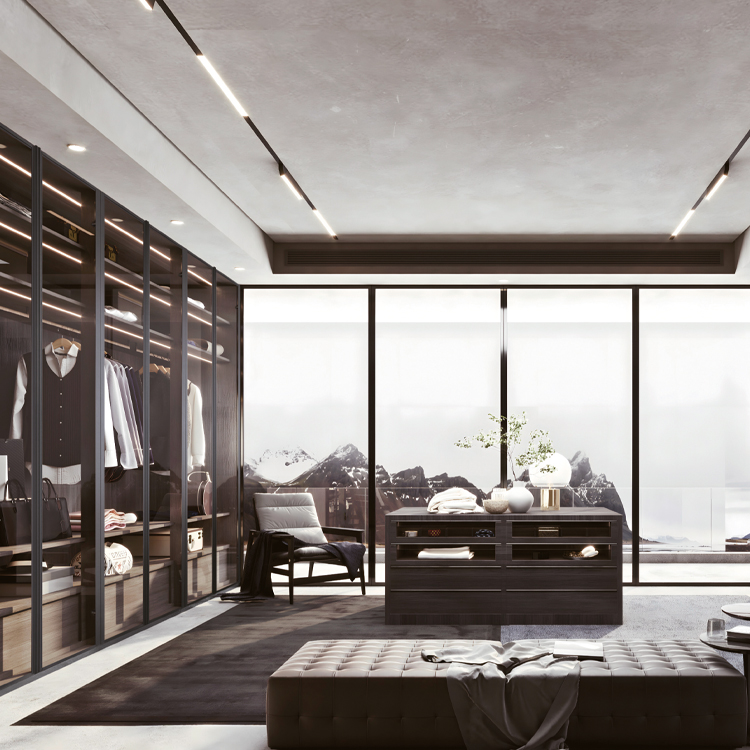
A luxury modern walk-in wardrobe with island centers on a strategically placed island that harmonizes with perimeter storage. The room must be at least 10 feet by 10 feet, with an ideal dimension of 12 by 12 feet to allow a 36-inch clearance on all sides for comfortable movement and drawer access. The island typically houses deep drawers for folded items, compartments for accessories, and a generous counter surface for folding or staging outfits. Meanwhile, the surrounding walls feature adjustable hanging rods, modular shelving, and custom cabinetry—maximizing both capacity and visibility. This 360-degree layout ensures every item is within sight and reach, transforming the space into a functional, boutique-like environment.
How Islands Elevate Functionality and Aesthetic Cohesion
Beyond storage, the island serves as the room’s visual and operational anchor—blending practicality with refined design. Its counter provides a dedicated zone for organizing daily outfits, packing luggage, or displaying curated accessories, streamlining the dressing routine. Aesthetically, the island introduces symmetry and retail-inspired elegance, especially when paired with integrated lighting, premium materials like marble or walnut, and bespoke finishes. This cohesive integration enhances spatial flow while elevating daily rituals—turning a utilitarian closet into a personal sanctuary that reflects intentional living and discerning taste.
Tangible Benefits of a Wardrobe Island in High-End Interiors
Enhanced Organization, Workflow Efficiency, and Daily Ritual Support
A central island redefines organization as a curated experience—not just storage. By creating distinct zones for accessories, jewelry, and folded garments, it reduces morning preparation time by 27%, per spatial efficiency research cited in Architectural Digest’s 2024 design benchmark report. The circular workflow—circling the island for 360-degree access—minimizes physical backtracking and supports natural movement patterns. Countertops act as staging surfaces for outfit assembly, preserving garment integrity and reinforcing a seamless, high-performance routine essential to luxury living.
Psychological Advantages: Decision Clarity and Dressing Confidence
Visual accessibility directly lowers cognitive load. Open displays on islands eliminate “wardrobe blindness”—the frustrating search through obscured shelves—and reduce decision fatigue by 33%, according to a 2023 study published in the Journal of Environmental Psychology. Clear sightlines across coordinated accessories and garments foster confidence in outfit coordination, especially when pairing statement pieces. This boutique-style presentation transforms dressing from a functional task into an intentional ritual—one that reinforces personal style identity through thoughtful, visible organization.
Critical Drawbacks and Practical Limitations to Consider
Space Constraints, Traffic Flow Disruption, and Hidden Maintenance Burdens
Island units demand significant floor area, requiring a minimum wardrobe footprint of 8×10 feet to avoid congestion—a constraint that often sacrifices hanging space or seating areas. Poorly positioned islands can block natural movement paths between clothing zones, creating bottlenecks during peak-use times. Hidden maintenance burdens include weekly dusting of display surfaces and periodic lubrication of drawer tracks—tasks frequently underestimated during planning. As noted in the National Association of Home Builders’ 2023 ergonomic study, 68% of island owners reported unexpected increases in cleaning time, particularly with glass-top or open-shelf configurations.
When an Island Undermines Luxury: Clutter Risk and Design Mismatch
Counterintuitively, islands can become clutter magnets when surface area exceeds actual storage needs. Watches left beside perfume bottles or scarves draped over countertops quickly erode the minimalist serenity expected in luxury interiors. Design mismatch arises when traditional furniture profiles clash with contemporary built-ins—a common issue when repurposing freestanding pieces instead of commissioning custom solutions. Architectural Digest’s 2024 case studies found that islands occupying more than 30% of total wardrobe square footage increased perceived clutter by 41%, directly undermining the calm, elevated ambiance central to premium environments.
Design Best Practices for a Successful Luxury Modern Walk-in Wardrobe with Island
Minimum Dimensions, Ergonomic Clearances, and Layout Synergy
A successful luxury modern walk-in wardrobe with island begins with precision planning. The smallest functional room measures at least 10 by 10 feet (3 × 3 meters), allowing for a central island with 36-inch (91 cm) walkways on all sides—enough space to open drawers fully and move freely without compression. Island dimensions typically range from 2 × 4 feet to 4 × 6 feet; the key is maintaining at least three feet of clearance around every side to preserve openness and flow. When walkways shrink to 24 or 30 inches, the island shifts from focal point to obstruction. Layout synergy is critical: align the island with perimeter zones so the dressing sequence—from selecting garments to checking accessories—moves intuitively. Factor in full drawer extension depth when calculating clearances. A well-proportioned layout transforms the room from a basic closet into a refined, human-centered dressing space.
Premium Materials, Integrated Lighting, and Bespoke Customization
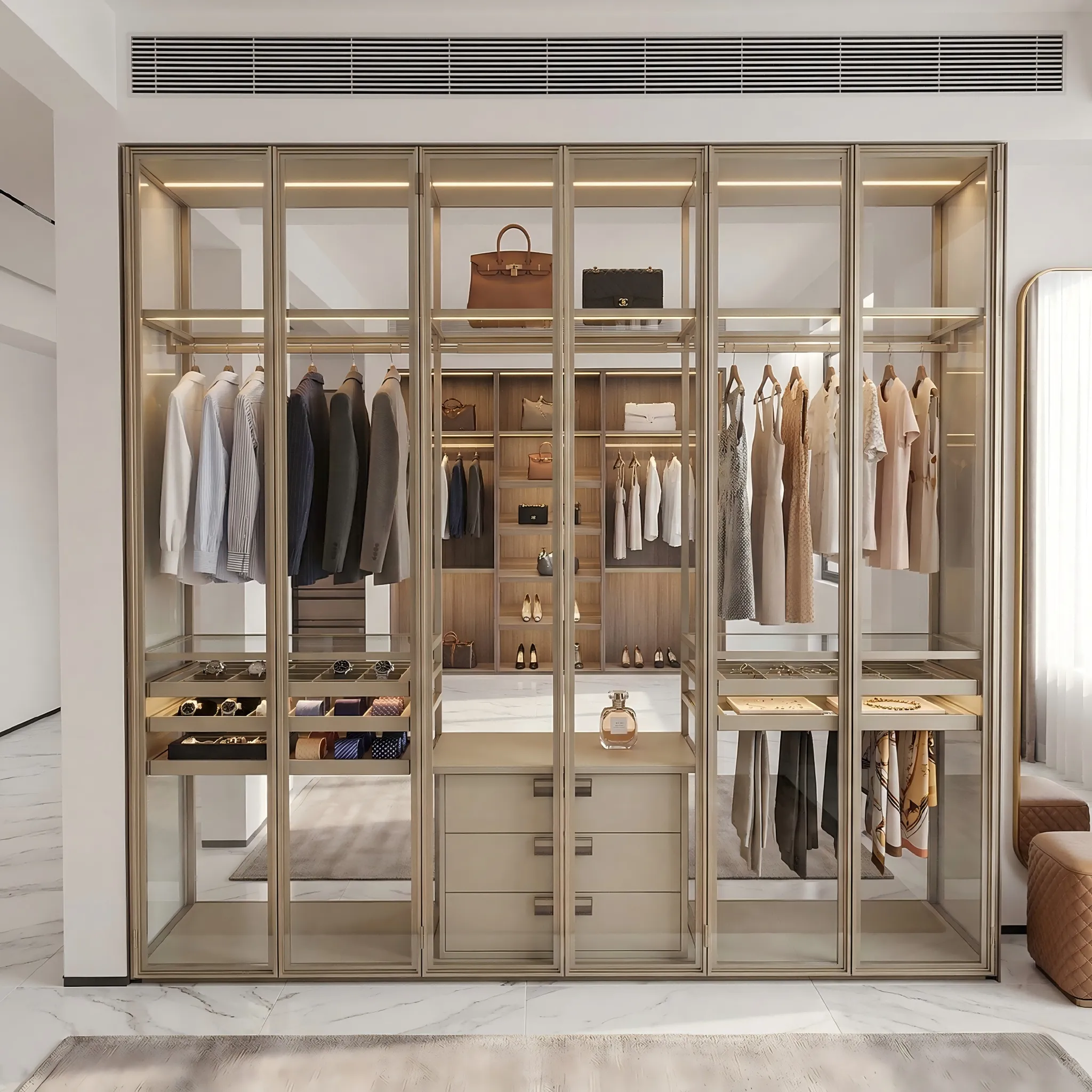
Elevating the space beyond utility requires material intentionality and layered lighting. Rich hardwoods, honed marble or quartzite countertops, and soft-close, full-extension hardware signal quality at first touch. Integrated lighting is non-negotiable: recessed ceiling fixtures provide ambient brightness, while LED strips inside drawers and under cabinet edges ensure task-level visibility. Bespoke customization unlocks true functionality—shallow trays for jewelry, deeper compartments for knitwear, and glass-topped display sections that turn accessories into curated art. Strategically placed mirrors expand perception of space and support real-time outfit evaluation. Built-in electrical outlets power garment steamers or smart devices discreetly. When materials, lighting, and tailored storage converge with purpose—not excess—the island becomes the defining centerpiece of a luxury modern walk-in wardrobe: functional, serene, and unmistakably authoritative.
FAQs
What is the minimum recommended size for a walk-in wardrobe with an island?
The minimum recommended size is 10×10 feet, with 36-inch clearance on all sides of the island for comfortable movement and accessibility.
What materials are best for a luxury wardrobe island?
Premium materials like hardwoods, honed marble or quartzite countertops, and soft-close hardware enhance functionality and longevity while adding a luxurious aesthetic.
How does an island improve wardrobe organization?
Islands provide separate zones for accessories, folded garments, and staging outfits. They reduce decision fatigue, streamline workflows, and create boutique-style organization.
What are the drawbacks of adding an island?
Drawbacks include space constraints, potential traffic flow disruptions, and increased maintenance, such as dusting and drawer lubrication.
How can I prevent an island from becoming cluttered?
Use customized compartments and avoid exceeding your actual storage requirements. A minimalist approach to surface use helps maintain a serene aesthetic.