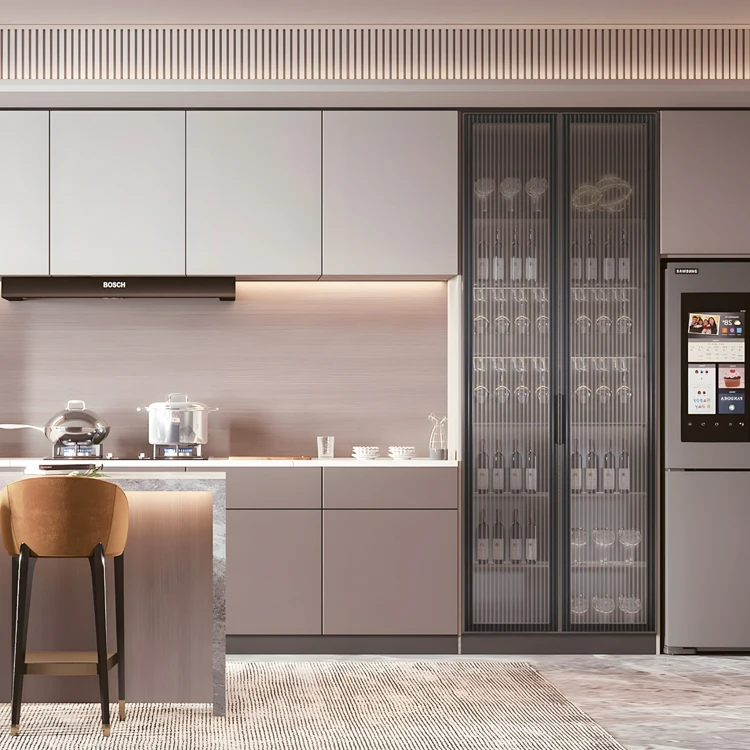
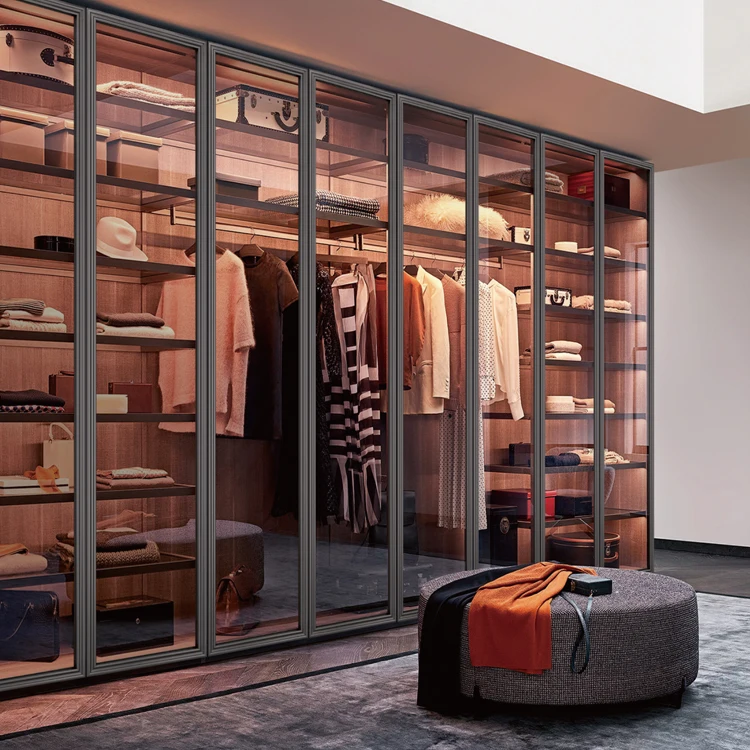
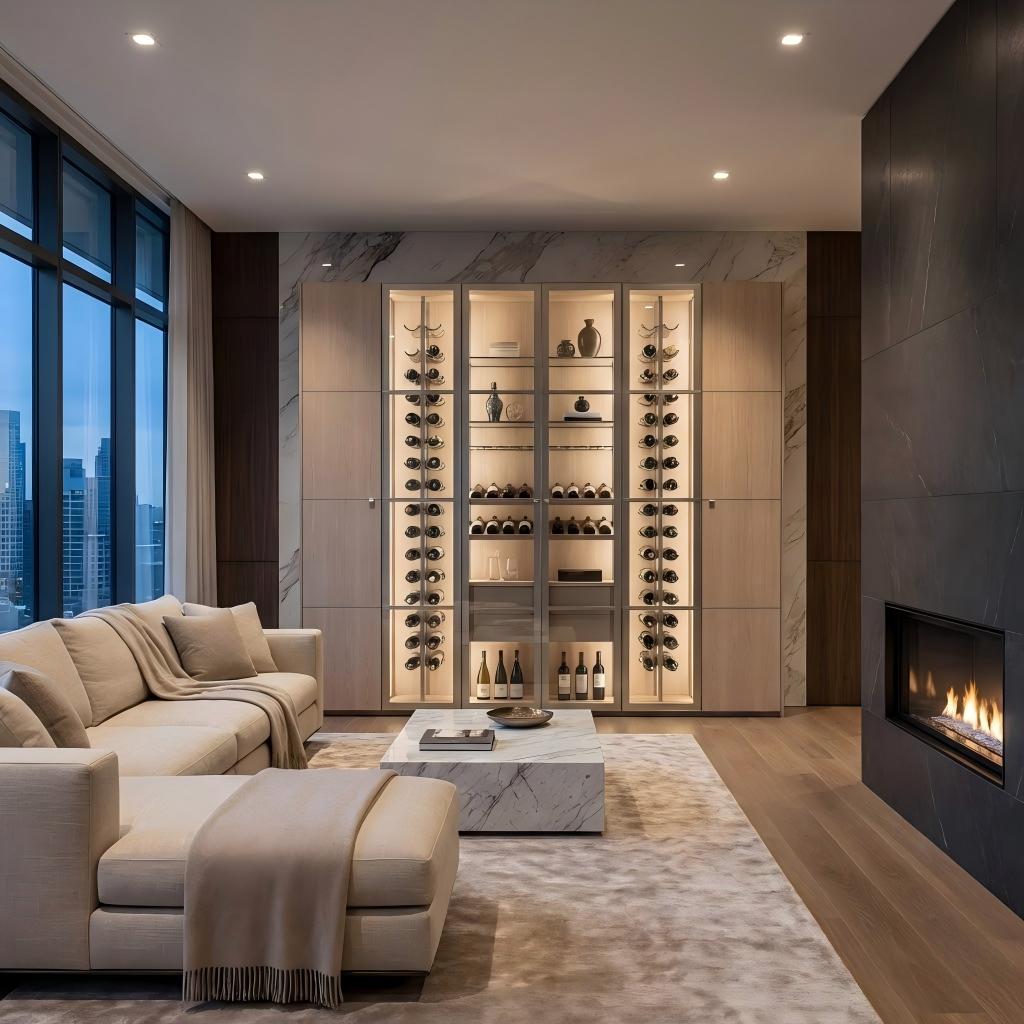
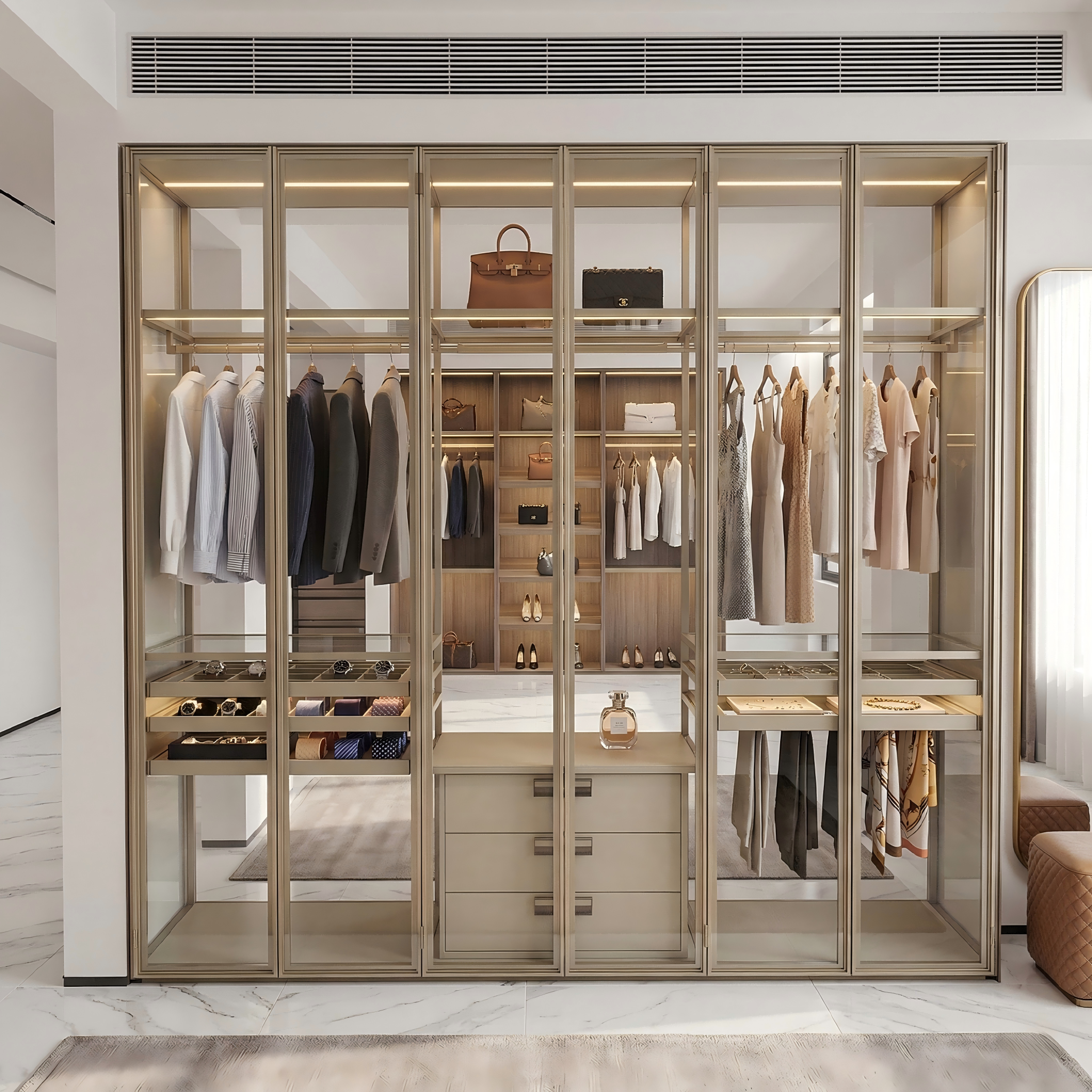
Explore a custom aluminum-framed glass display cabinet with seven organized wood drawers, broad-opening pivot doors and optional LED lighting.
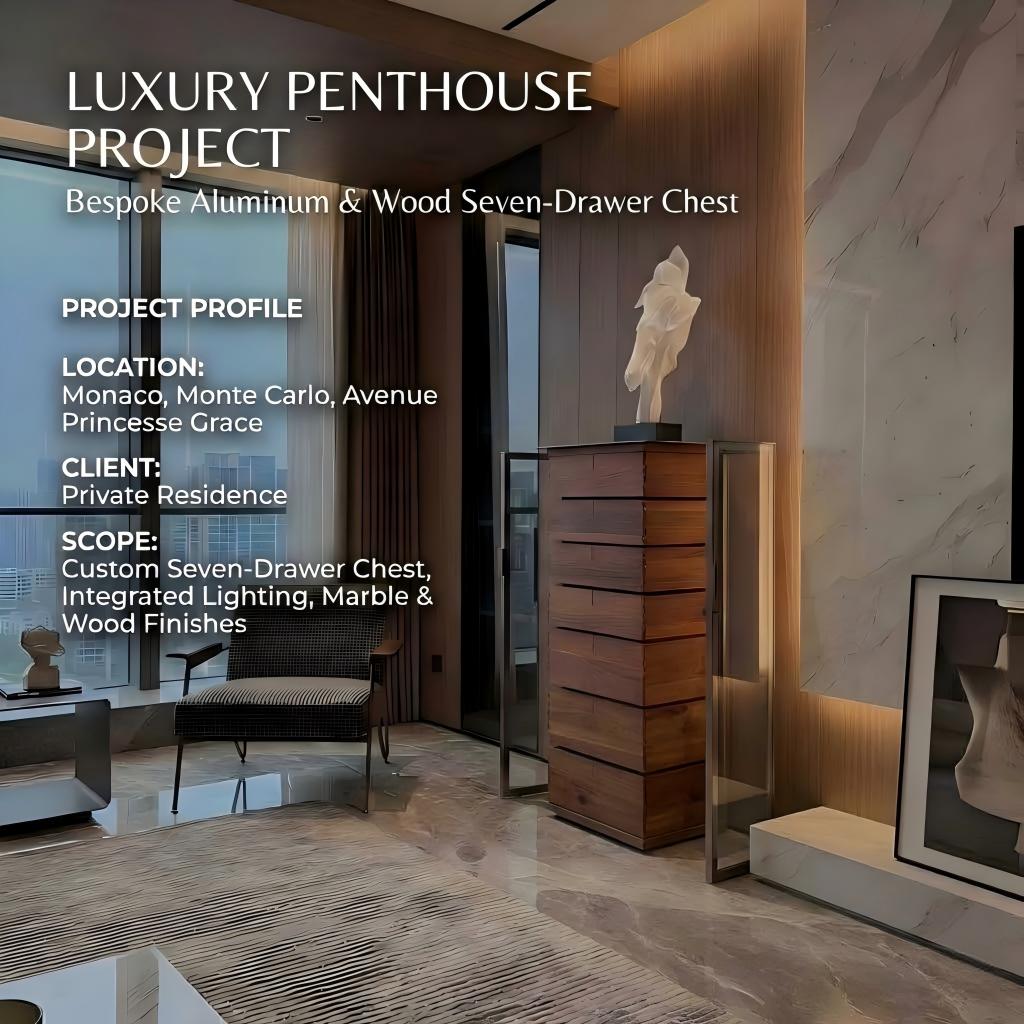
This freestanding cabinet combines a transparent aluminum-framed glass enclosure with a tall seven-drawer storage tower. The repeated drawers organize jewelry, watches, ties, documents, leather goods and other private collections, while the glass doors and side panels keep the wood craftsmanship visible from different viewing angles.
The central drawer tower provides the main storage capacity. The slim metal frame, glass doors and transparent sides create a lighter visual boundary around it, allowing the cabinet to function as both organized storage and a visible interior object.
A tall drawer cabinet can easily appear dense, especially when placed in a bedroom or dressing room. The transparent enclosure reduces the visual mass while preserving a clear furniture boundary around the wooden drawer tower.
The design also needs full access to every drawer. Door width, pivot location, opening angle and nearby furniture must therefore be coordinated before final cabinet dimensions are approved.
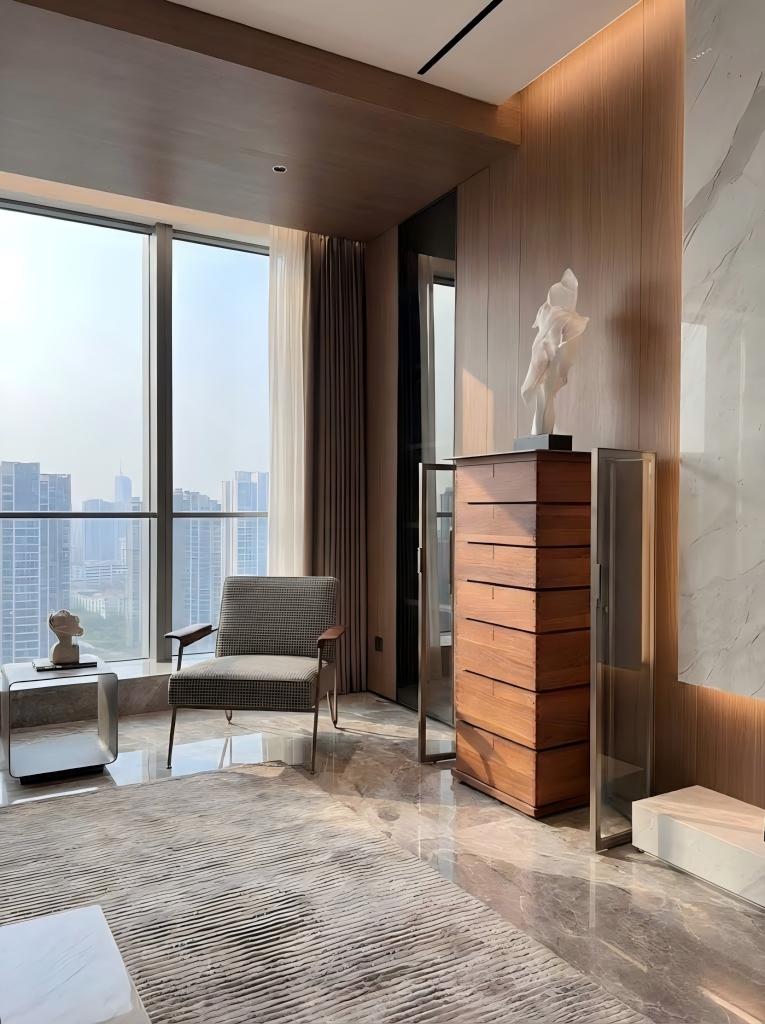
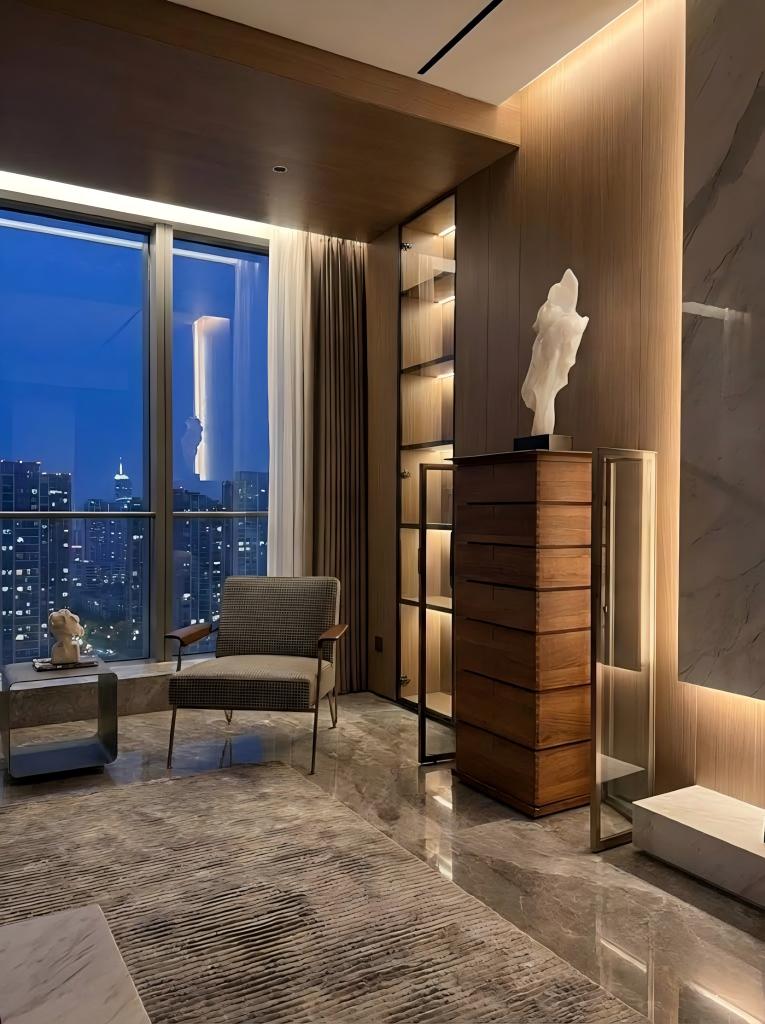
In daylight, the wood grain and drawer alignment remain the main visual focus. At night, integrated lighting can provide depth and improve visibility through the glass enclosure.
Final LED temperature, dimming, switching, sensors, cable route and driver access should only be stated after the electrical specification is confirmed.
The value of the cabinet is not simply that it has seven drawers. Each level can be given a different role, with trays, partitions and soft linings selected for the items stored inside.
Drawer depth, internal organizers, locks and lighting should be selected according to the intended contents.
Organize watches, jewelry, ties, belts, scarves and personal dressing accessories.
Store documents, writing instruments, albums and collectible objects in separate levels.
Use custom trays and linings for watches, memorabilia or other categorized collections.
Keep premium goods visible through glass while organized stock remains inside the drawers.
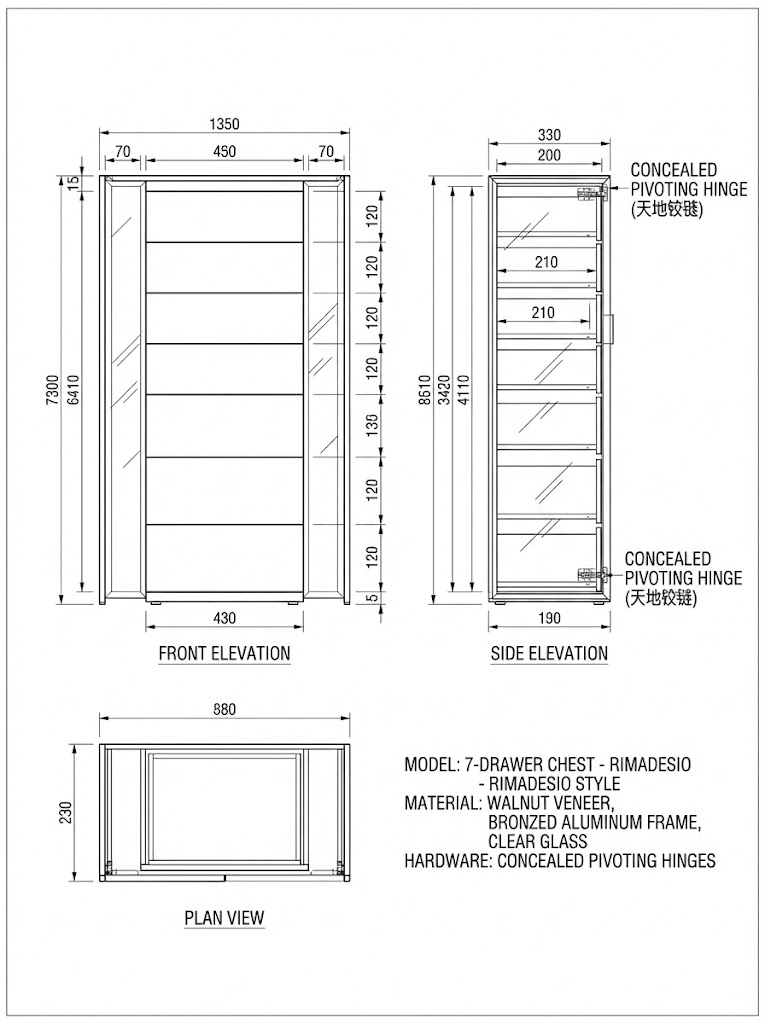
The current CAD image can explain the intended tall format and component relationship, but it should not be used as the sole source for quotation, production or installation unless all dimensions and hardware details have been verified.
A freestanding transparent cabinet cannot be positioned only from its closed dimensions. Nearby walls, curtains, furniture and walkways can affect the usable opening angle.
Allow users to stand in front of the cabinet and fully extend the selected drawer.
Check the movement of both framed glass leaves against nearby furniture and walls.
Confirm floor level, skirting, rugs and any adjustable-foot or anchoring requirements.
Where lighting is included, coordinate sockets, cables, drivers and future maintenance.
Because the central storage tower remains visible from multiple angles, the wood grain, corner joints, drawer gaps, metal pulls and internal organizers all contribute to the finished presentation.
Confirm whether the drawers use solid wood, natural veneer or another project-selected construction.
Select clear or grey-toned tempered glass according to the project and safety requirements.
Specify runners, soft closing, locks and pull finishes in the approved hardware schedule.
Choose trays, partitions and soft surfaces according to watches, jewelry or other stored items.
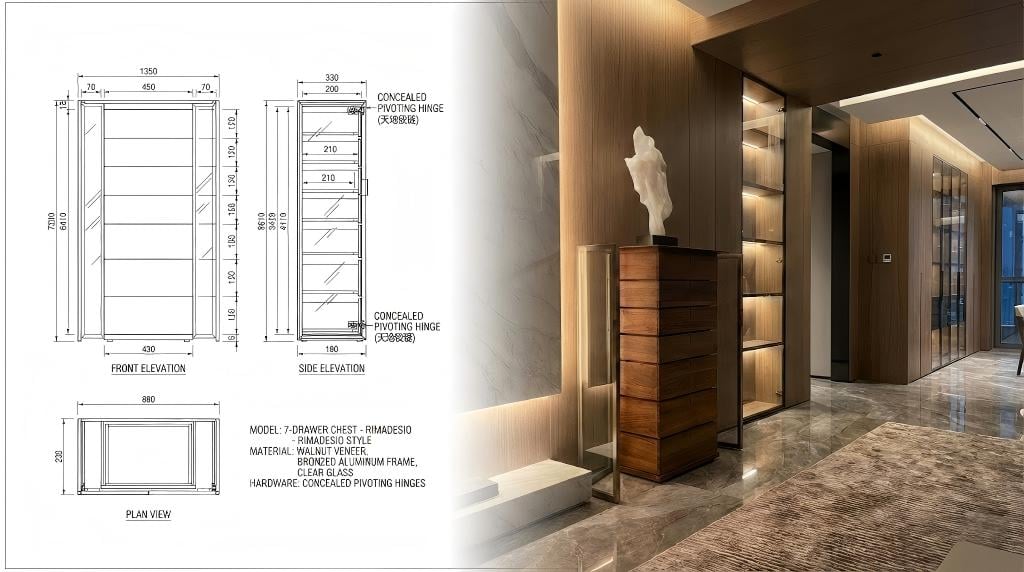
The final package should define cabinet dimensions, drawer interiors, wood construction, glass specification, pivot hardware, door clearance, locks, lighting, electrical access, anti-tip details and export packing.
Real showroom photographs, open-door images, drawer-interior details and factory assembly records should be added when available. They provide stronger buyer confidence than additional lifestyle renderings.
Send available width, height, depth, nearby walls, furniture and room photographs.
List stored categories, object sizes, required trays, dividers and internal lining.
Confirm metal finish, glass tone, wood construction, pulls, locks and lighting.
Review drawer dimensions, door movement, hardware, electrical route and safety details.
Complete woodworking, cabinet assembly, door checks, lighting tests and protective packing.
Adjust overall dimensions while maintaining safe door movement and usable drawer access.
Configure trays, partitions, depths and linings for the intended collection.
Coordinate the frame color, glass tone, drawer wood and pull finish.
Discuss locks, LED positions, switching, dimming and cable access.
Placement conditions and drawer contents affect the cabinet dimensions, internal organizers, hardware and final quotation.
No. The illustrated product is a seven-drawer storage and display cabinet for accessories, documents, collectibles or boutique goods.
Yes. Trays, partitions, soft linings and internal dimensions can be developed according to the intended stored items.
Yes. Overall dimensions can be customized, but door movement, glass weight, drawer access and stability must be reviewed in the final drawing.
No. Aircraft is used as a product-series name and should not be treated as material certification.
Project-selected locks, LED lighting, dimming and sensors can be discussed and confirmed in the approved hardware and electrical schedule.
Send placement dimensions, room photos, drawer contents, organizer needs, finish preferences, door-clearance conditions and delivery destination.
Send the placement dimensions, intended drawer contents, preferred materials, lock requirements, lighting preference and delivery location. ESM can use this information to discuss a custom configuration.

 EN
EN