All Categories

Custom Wall-Mounted Acrylic Wine Display with LED

Explore a custom wall-mounted acrylic wine display with transparent bottle supports, metal framing, a decorative back panel and integrated LED lighting.
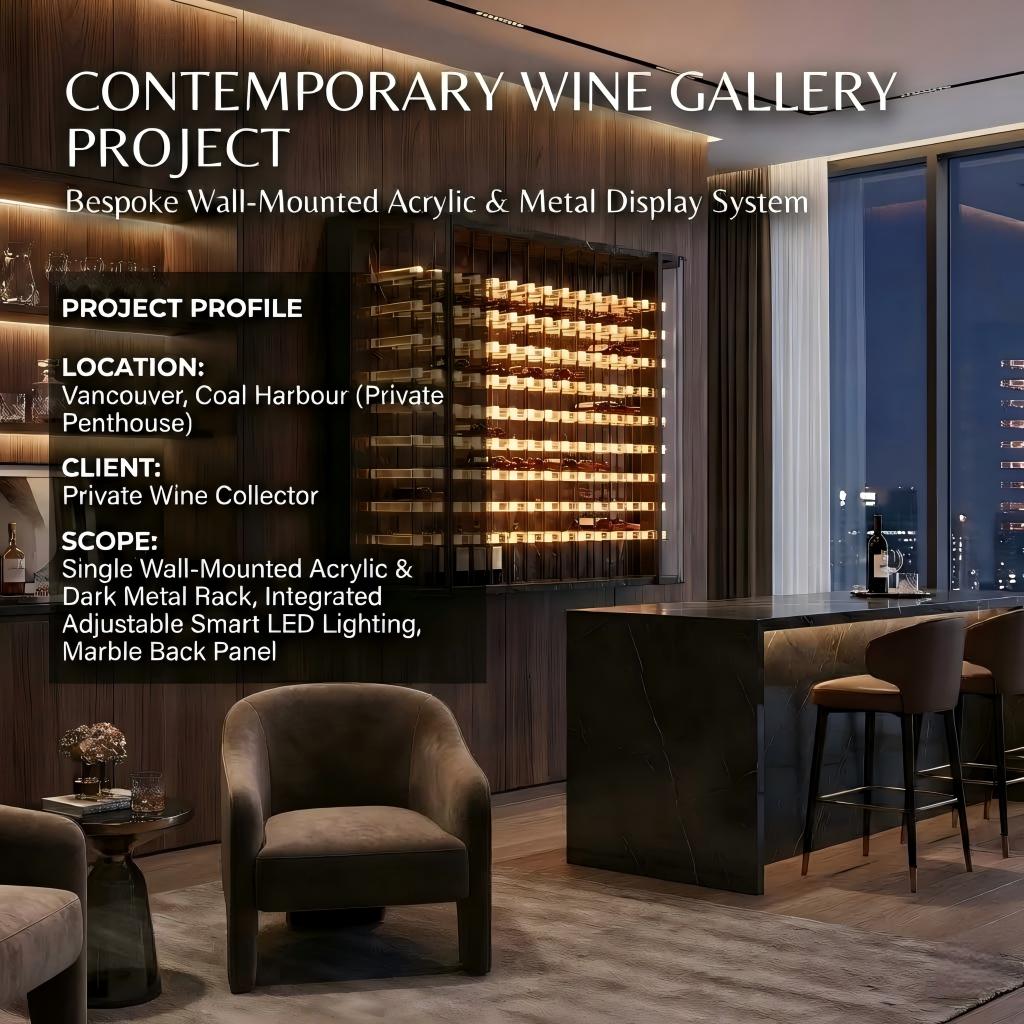
Custom Wall-Mounted Acrylic Wine Display with LED
Custom Wall-Mounted Wine Display Project

Illuminated Acrylic Wine Wall with Transparent Bottle Supports

This made-to-measure wine display uses clear acrylic bottle cradles, a repeated metal-rod grid, a dark decorative back panel and integrated LED lighting to create the appearance of bottles floating across the wall. It is designed as an architectural bottle display for residences, home bars, entertainment spaces, restaurants and hospitality interiors—not as a conventional floor-standing cabinet.

Project Overview

A transparent bottle-display grid developed around the wall and the collection

The number of rows and columns, acrylic support geometry, metal frame, backing panel, installation depth and electrical route should be developed as one complete assembly. Bottle capacity is calculated from the approved grid rather than a single standard model.

Product Type Custom wall-mounted acrylic wine bottle display system
Applications Home bar, living room, dining space, restaurant, club or hospitality interior
Visual Feature Transparent bottle cradles create a floating-bottle effect
Main Structure Metal outer frame, vertical support rods and wall-fixing assembly
Background Dark, stone-look or other project-selected decorative panel
Lighting Integrated LED coordinated with acrylic, wiring, controls and service access
Design Challenge

Make the bottles appear weightless while safely transferring the load to the wall

The transparent acrylic reduces visual mass, but the physical weight of the bottles, support modules, frame and back panel still has to be carried by a verified structural system. The wall condition and fixing strategy therefore matter as much as the visible design.

Bottle spacing must also balance capacity with label visibility and access. Rows that are too dense can hide labels and make individual bottles difficult to remove, while excessive spacing reduces the useful display capacity.
  • Confirm the wall substrate and reinforcement before approving the display grid.
  • Calculate the total bottle load using the actual intended capacity.
  • Check bottle removal clearance and projection from the finished wall.
  • Coordinate wires, drivers and maintenance access before closing the back panel.
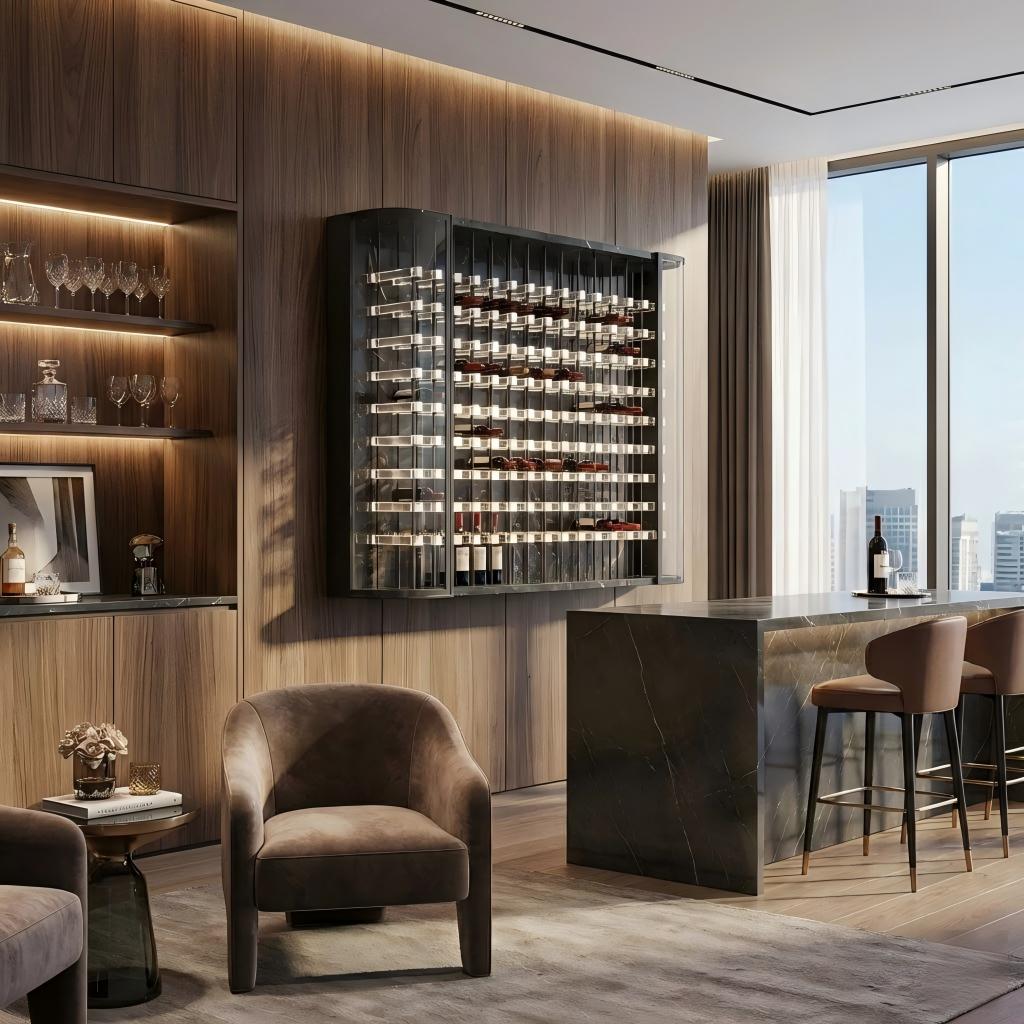
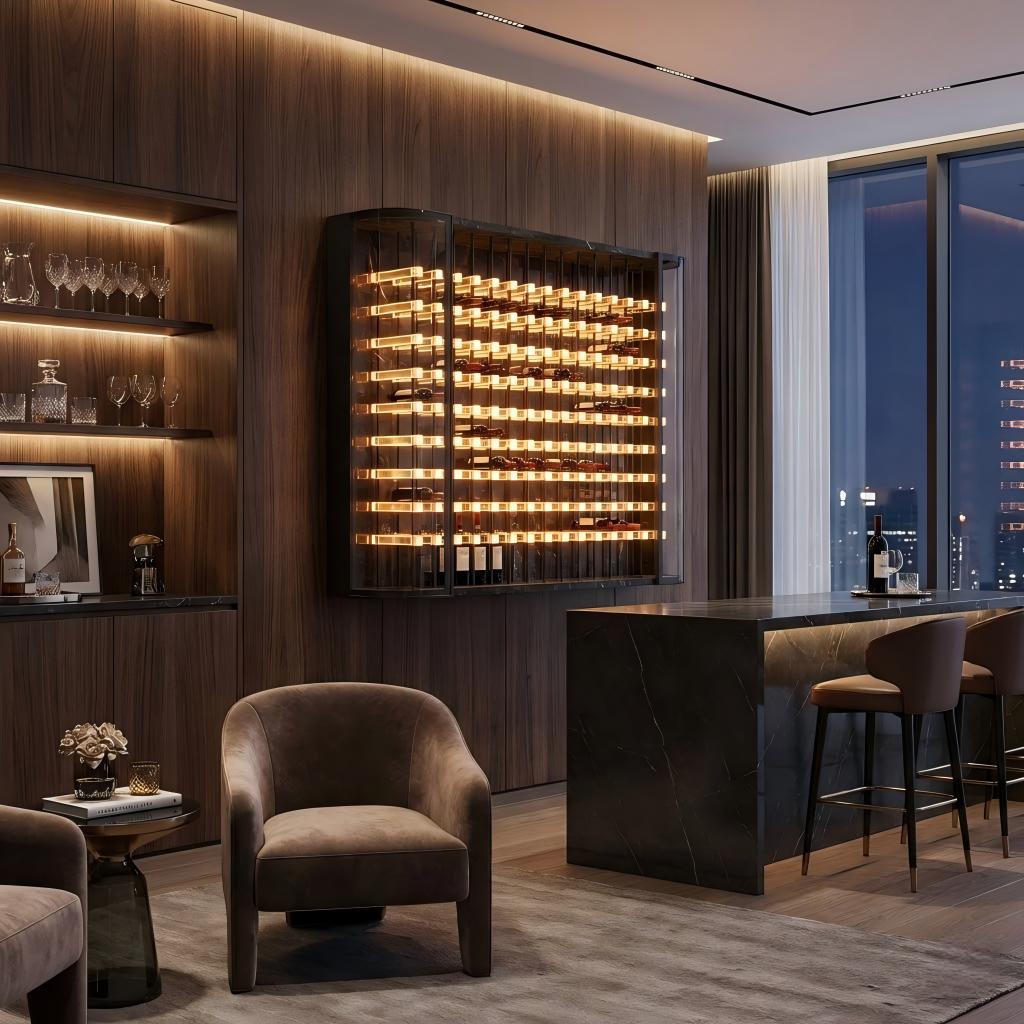
Wall-mounted acrylic wine bottle display with metal grid and dark back panel in natural daylight
Daylight view showing the transparent bottle supports, repeated metal grid and dark wall-panel contrast.
Wall-mounted acrylic wine display illuminated by integrated warm LED lighting at night
Evening view illustrating how light passes through the acrylic supports and defines each bottle position.
Daylight to Evening

Lighting transforms the transparent grid into an illuminated bottle wall

In daylight, the support modules remain visually light and allow the collection to dominate. At night, the integrated lighting emphasizes the repeated acrylic geometry and creates a clearer relationship between each bottle and the dark background.

Final color temperature, brightness, dimming, switching, driver location and smart-home integration should only be stated after the electrical specification has been confirmed.

Replace “smart adjustable lighting” with the actual supplied control method—such as a wall switch, dimmer, remote control, sensor or project-specific automation—after confirmation.
System Architecture

Five coordinated elements create the complete acrylic wine wall

The visual simplicity depends on hidden coordination behind the transparent display. The acrylic modules, rod grid, frame, back panel and electrical system should not be designed separately.

01

Outer Metal Frame

Defines the installation boundary and receives the internal support grid and side treatments.

02

Vertical Rod Grid

Organizes the bottle columns and transfers the repeated support modules into the main structure.

03

Acrylic Bottle Cradles

Clear machined supports hold individual bottles while transmitting and reflecting the integrated light.

04

Back Panel & LED

The decorative background, wiring, drivers and lighting complete the visual wall composition.
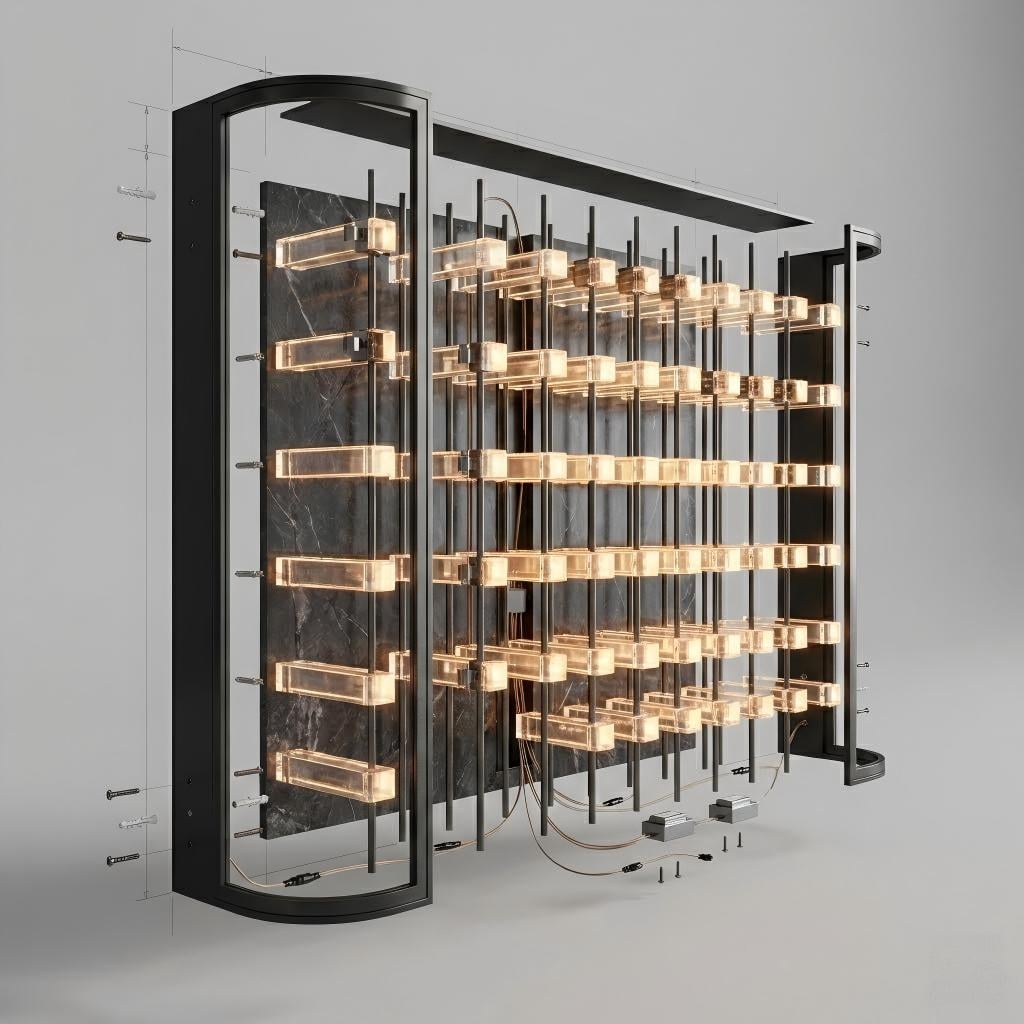
Exploded construction view of a wall-mounted acrylic wine bottle display system
Exploded illustration showing the relationship between the frame, vertical rods, acrylic supports, lighting and back panel.
Component Relationship

Transparent parts leave little room to hide inconsistent details

Connector proportions, rod spacing, acrylic machining, cable concealment and frame alignment are directly visible in the finished display. A clean result therefore depends on consistent repetition and careful assembly.

  • Confirm acrylic thickness, edge finish and machining tolerances.
  • Coordinate rod finish and connector dimensions across every row.
  • Plan how the frame connects to the wall and decorative panel.
  • Keep electrical components accessible for testing and replacement.
  • Verify that the completed system can be packed and installed without damaging the acrylic.
Avoid universal statements such as “unparalleled structural integrity” unless the final assembly, wall fixing and complete bottle load have been verified.
Bottle Compatibility

Design the acrylic support opening around the actual bottle formats

Wine bottles vary in diameter, shoulder shape and length. One nominal opening should not automatically be described as suitable for every bottle type.

Standard Wine Bottles Confirm the typical diameter and length of the bottles that will make up most of the collection.
Champagne & Wider Bottles Larger diameters may require different support spacing or dedicated positions in the grid.
Special Formats Magnums, unusual shoulders and collectible bottles should be measured before the layout is approved.
90 × 90 mm Reference acrylic support opening stated in the current page source; compatibility requires verification.
Project Defined Final support size and spacing should follow the selected bottle formats and approved sample test.
Wall & Installation Planning

A wall-mounted bottle display requires verified support, depth and electrical access

The display should not be priced or produced from width and height alone. Wall material, reinforcement, total bottle load and projection into the room must be confirmed first.

Wall Substrate

Concrete, masonry, timber framing and metal-stud walls require different reinforcement and fixing details.

Total Installed Load

Calculate the frame, acrylic, back panel and fully loaded bottle weight—not only the empty display.

Projection & Access

Check bottle length, removal movement, nearby furniture and circulation clearance in front of the wall.
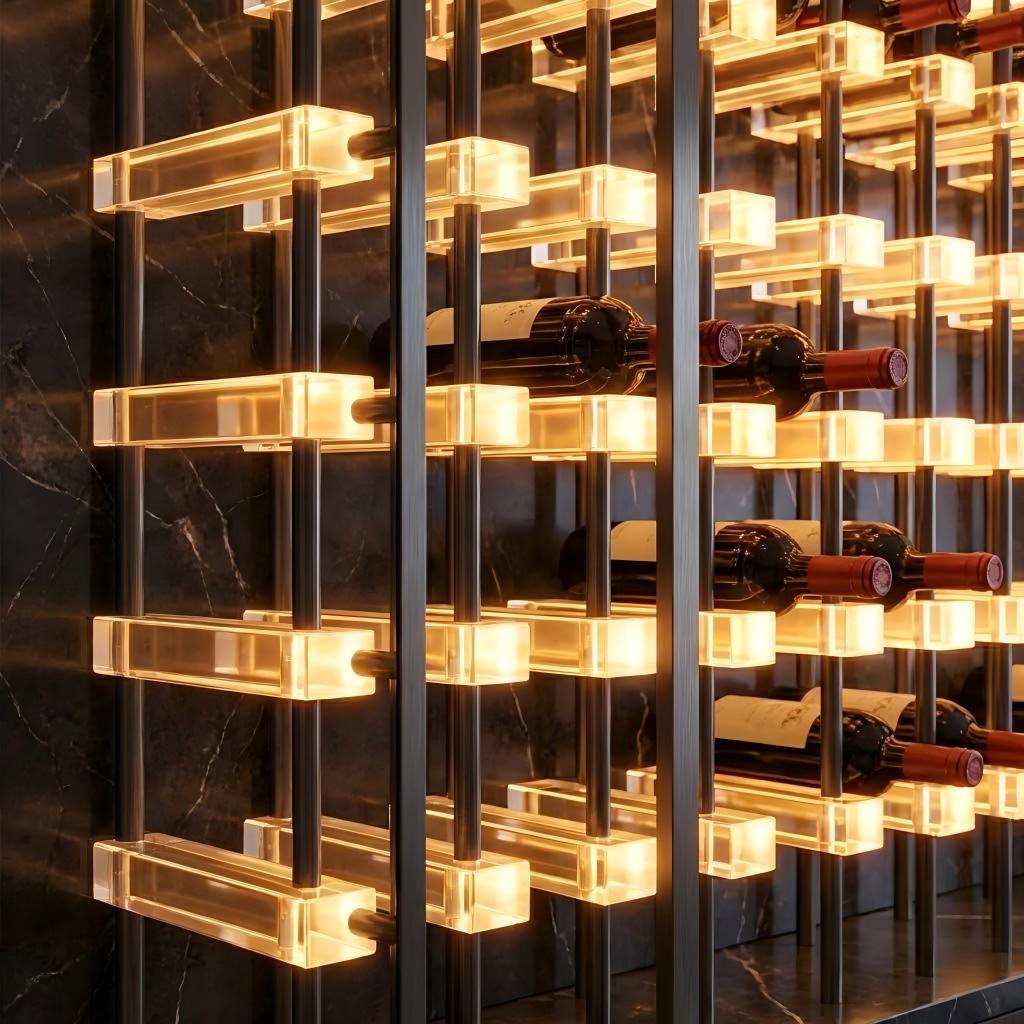
Close-up of illuminated acrylic wine bottle supports attached to vertical metal rods
Close-up showing the acrylic bottle cradles, metal-rod spacing and illuminated support pattern.
Reference Configuration

Use the current dimensions as one concept—not as the only available size

The existing page describes a 136 × 165 cm wall display. That measurement can remain as a reference for the configuration shown, but a new project should be recalculated from the available wall, bottle quantity, bottle type, surrounding furniture and desired visual proportion.

1360 mm Reference overall width stated for the current concept
1650 mm Reference overall height stated for the current concept
  • Change rows and columns according to required bottle capacity.
  • Confirm side-frame form and overall projection from the wall.
  • Coordinate the back panel with adjacent cabinetry and finishes.
  • Review the complete elevation before approving fabrication.
Important Wine-Storage Note

Acrylic wine display furniture is not a climate-controlled wine cellar

No Built-In Refrigeration The display does not automatically cool bottles or maintain a target storage temperature.
No Humidity Control Humidity management requires separate room or enclosure equipment and technical planning.
Light & Heat Conditions Placement should be coordinated with the interior designer where sunlight, heat or long-term storage is a concern.
Display vs. Cellaring This system is best described as wine display and furniture storage unless a separate conditioned environment is provided.
From Design Proposal to Production

Convert the visual grid into a verified wall elevation and installation plan

The final drawing should confirm overall size, row and column quantity, bottle orientation, acrylic support dimensions, rod spacing, frame construction, wall fixing, back-panel joints, electrical routes and maintenance access.

When factory assembly, lighting-test and completed installation photographs become available, add them here. Those materials provide stronger buyer confidence than additional decorative renderings.
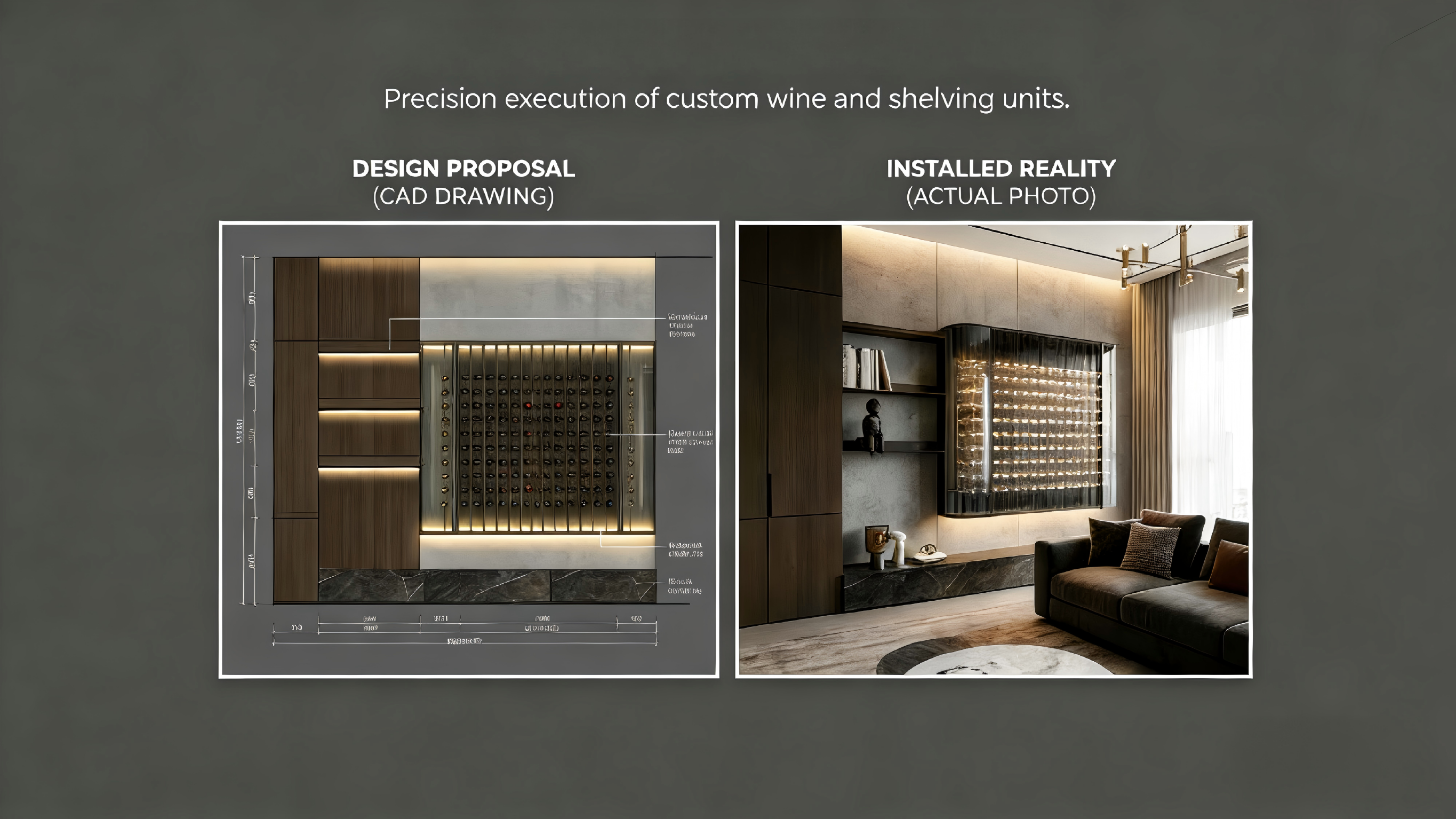
Treat the current comparison image as a design-development presentation unless it is supported by verified production drawings and real installation documentation.
Design proposal and finished-space presentation for a wall-mounted acrylic wine display
Design-development comparison. Final manufacturing and installation require approved technical drawings.
STEP 01

Send Wall Information

Provide wall width, height, substrate, photographs, nearby furniture and available drawings.

STEP 02

Confirm the Collection

Provide bottle quantity, typical diameters, lengths and any wider or special formats.

STEP 03

Develop the Grid

Arrange rows, columns, support spacing, back panel, frame and overall projection.

STEP 04

Approve Technical Details

Confirm wall fixing, acrylic sample, metal finish, lighting controls and electrical access.

STEP 05

Produce & Inspect

Complete fabrication, fit checks, lighting tests, surface inspection and protective export packing.

Customization Options

Adjust the display grid to the wall, collection and interior material palette

A

Rows & Columns

Customize overall size, bottle quantity, spacing and visual density.

B

Acrylic Supports

Confirm support geometry and spacing against the intended bottle formats.

C

Frame & Back Panel

Coordinate the metal finish, side-frame form and decorative wall surface.

D

Lighting & Controls

Plan color temperature, dimming, switching, drivers and smart-home requirements.

Information Required for a Quotation

Send enough information for a useful bottle-grid and installation proposal

Accurate bottle and wall information allows the capacity, support spacing, frame size and fixing method to be evaluated more responsibly.

  • Finished wall width, height and available projection depth
  • Wall construction and any known reinforcement information
  • Room photographs and surrounding furniture or cabinet dimensions
  • Approximate bottle quantity and preferred rows and columns
  • Typical bottle diameter, length and special bottle formats
  • Preferred bottle orientation and label-visibility requirement
  • Preferred metal, acrylic and back-panel appearance
  • Power location and preferred lighting-control method
  • Whether climate-controlled storage is required separately
  • Destination country, city and postal code
Project FAQ

Common questions before developing a wall-mounted acrylic wine display

Can the overall size and bottle quantity be customized?

Yes. The number of rows and columns, overall dimensions and bottle capacity should be calculated from the wall and approved grid.

Will a 90 × 90 mm support fit every wine bottle?

No universal fit should be assumed. Typical bottle diameters and any champagne, magnum or special formats should be checked before approval.

Can the display be installed on a drywall or metal-stud wall?

Potentially, but suitable internal reinforcement and fixing details must be developed from the actual wall and fully loaded display weight.

Can the LED be dimmable or use adjustable color temperature?

Lighting controls can be discussed, but dimming and adjustable color temperature should only be promised when included in the confirmed LED and driver specification.

Does the system provide wine refrigeration or humidity control?

No. It is a bottle-display furniture system. Controlled wine-storage conditions require separate cooling, insulation and humidity planning.

What information is needed for the first quotation?

Send wall dimensions, wall type, photos, bottle quantity, typical bottle sizes, finish references, electrical requirements and delivery destination.

Continue Exploring

Related wine-display products and cabinet systems

Start Your Project

Planning an illuminated acrylic wine wall for a residence, bar or hospitality interior?

Send the wall dimensions, bottle quantity, typical bottle formats, preferred materials, lighting controls and delivery location. ESM can use this information to discuss a custom display grid.

Prev

Custom Ultra-Slim Aluminum Wall Shelving with Integrated LED

All Project Next

Floor-to-Ceiling Modular Aluminum Shelving for a Luxury Office

RELATED PRODUCT

Get a Free Quote

Our representative will contact you soon.
Email
Mobile/WhatsApp
Name
Company Name
Message
0/1000